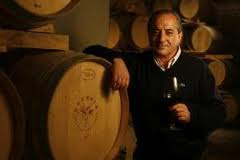
Few times every summer, we get the challenge of designing a special wine tour that involves coordinating unique wine tastings showcased by the most prestigious winemakers/winery owners of our region. Winemakers or producers from around the globe, journalists, wine traders, wine lovers and chefs are usually the typical guests for these special tours.
These requests are both hard work and a real pleasure to partake, since these winemakers or owners are hard to round up with their busy schedules. On the other hand, we get to taste wines that normally are out of reach, explained by their creators.
But the real task here is to quickly "interpret" our guest palate style in order to choose wines that probably will fit his/hers senses. The final idea is to create an pleasurable surprise, in order to get close to a "wine epiphany" type experience as possible and exceed expectations, that already are set pretty high.
Few weeks ago, long time wine collector and connoisseur from Singapore, visited Argentina. He was looking for a learning experience about our wines, from the inside, searching for labels worth collecting, and I was commissioned to guide them through this task.
They had a previous stop in Salta, Argentina´s northwest wine producing region, the place with the highest vineyards in the world.
I really wanted to give them a cross section of the industry in Mendoza, so in the afternoon of the first day we went to
The Vines of Mendoza tasting room. You see, we are not only malbec, a great number of other varieties are grown here being now days vinified into wonderful wines.
There we sat in a private room, over a sea of glassware. First we tried an array of four Torrontes. Then a flight of seven Malbecs, from young to complex, from different sub-appellations. After this, a set of five blends, and later on, a couple of rarities like Lorca´s 100% petit verdot. Some of these samples were really big wines, all of them over 90 points. Not vinegar at all!
Wine tasting at The Vines of Mendoza
He was taking notes and playing with his own rating system. After two hours, the verdict came: not happy...
Mamma mia! I thought. We better nail it tomorrow. Our reputation as an up-coming first class wine producing country with wines worth ageing and collecting was in jeopardy.
Day two: Wonderful morning, I pick them up at 9:15 AM at
Cavas Wine Lodge for a full and last day of tasting and interviews. Not far from this countryside hotel in the sub-appellation of Agrelo, our first winery of the day was awaiting.
By the end of this trip, so many wines were tasted that it will make an endless entry if I describe tasting notes of all of them.
VIÑA COBOS: Paul Hobbs South American dream meets ideal partners and terroir.
Luis Barroud, Andrea Marchiori, painter Alberto Thormann and Paul Hobbs
Viña Cobos started at harvest time, 1998, when Californian winemaker Paul Hobbs partnered with local oenologists Andrea Marchiori and Luis Barroud, aiming at producing terroir-driven wines. Holding nowdays an impressive, highly rated portfolio, this state-of-the-art winery produced the first Argentinian wine to pass the u$s 150 price tag barrier in the US.
A showcase of
Alberto Thormann´s paintings greet us while we enter the building, as Mariana Cerutti, in charge of marketing and sales, as well as hospitality manager, warmly receive us for this special private tasting.
We started with entry level line Felino Malbec (91 points) and Felino Cabernet (90 points). Their makers want to highlight the utmost essence of each wine variety grown in different wine sub-regions of Mendoza, specially Luján de Cuyo and Uco Valley. Intense, pure wines with good acidity, with 8 months in oak, and great quality for the price (just like Paul Hobbs entry level Cabernets from Napa!).
Then we moved on to the Bramare Vineyard Designation line, with Bramare Malbec Marchiori Vineyard (Agrelo, 95 points), Bramare Malbec Rebon Vineyard (Uco Valley, 94 points), and Bramare Cabernet Marchiori Vineyard (Agrelo, 93 points). Picturing specific terroirs, from 3,270 feet of altitude for Rebon Vineyard in Uco Valley, to a 80 years old vineyard at Marchiori estate.
Viña Cobos Volturno Blend 2009 - 98 points
He was asking questions and taking notes. Then, the turn for the Volturno 2009 - a blend Cab 80% Malbec 20% (98 points, Wine Advocate). This blend is one of the two icon wines of the winery, the other one is the Cobos Malbec (96 points). The Cobos Volturno is inky red, with alluring ripe blackberries, black cherries, licorice and dark chocolate that follow through on the palate. Richly textured, with plush, tight tannins covering dense layers of black fruits, leather, cigar box and crushed stones. Waves of flavors unfold over a lengthy finish, providing a deph of multiple dimensions.
The aging potential question arose and an interesting discussion took place, in our guest opinion, this wine needed at least 12 more years in bottle to develop its full potential. Verdict: not totally happy... Most of these wines are sold out vintage after vintage, so consumers seems to like them.
Manual harvest at Marchiori Vineyard / Viña Cobos
...I corked the rest of the bottle and saved it for later..., and we moved on to the next stop, Bressia Winery.
We got there ahead of schedule, so a walk among the vineyards that surround the winery gave me the chance to show them our ancient irrigation system, to see how vineyard workers were conducting the water from lot to lot, and also to see the different vine training systems, talk about clones, vineyard management and plant reproduction.
Walter Bressia belongs to a small group of select cult winemakers. He had spent more than 20 years working for a big winery. In 2003 he decided that he had enough and started his own project involving his whole family. His personality reflects in every wine of his portfolio.
Walter Bressia in his cellar
The whole line (except the sparkling and the grappa) was waiting for us at this small but warm winery, so we sat in a cozy relaxed living room with Walter and Marita (Walter´s eldest daugther, in charge of sales and marketing). Cheeses, nuts, raisins, cold cuts and crackers were also brought to the table, honoring the Italian tradition.
Walter wanted us to try his latest creation, the Silvestra malbec. Intended to be the purest expression of the fruit, this entry level unoaked malbec surprised everybody in the group. Silky, mature, simple but fresh, easy to drink yet elegant. Tsun-Yan was reluctant to try young wines, and this one really surprised him.
Afterwards, we tasted a Cabernet Franc from the Monteagrelo line. There is this slight trend I detected in certain wineries, to play with pure Cab. Francs, surprising everybody with very elegant, out of the ordinary wines (I also strongly recommend Cab. Francs from these other wineries: Pulenta Estate, Benegas Lynch, Riglos, Catena Zapata and El Zorzal).
Notes and questions, sip after sip, purpurish lips by now, then Conjuro Blend (spell or incantation in spanish) was poured, more notes, poker faces, polite comments. Then Profundo Blend (profound in spanish) and Walter telling us what it takes to vinify these nectars, the pleasure and honor to witness such erudition, gently transmitting knowledge, the passion of winemaking just veiled by the language barrier.
At this point, something had changed. The first smiles arise, and I went internally: hard to duplicate this experience, it does not get better than this. And just before the icon wine was poured, our guests were complimenting the wines and enquiring about their distribution.
The Last Page, or Ultima Hoja in Spanish was next. This secret assemblage is only released in extraordinary years. Walter blends the best four barrels in his cellar in order to bottle a small, limited edition of this wine.
The family choose this name in Walter career´s honor: winemakers normally average 35/40 harvests in their working life, he is about to work his # 36. So virtually these coming years are going to be the last pages of his wine storybook, resuming all his experience in this wine.
Its color is intense deep red, with purple and black highlights, framing an incredible attractive core. In the nose, ripe red and dark fruits like plums, raspberries, blackberries and gooseberries. Just the right combination of chocolate aromas, caramel and coffee lent by the high-quality fine toast of the french oak. Sweet but well balance, robust but extremely elegant body, with a long, refined and memorable finish. Then, the verdict came: SEAMLESS BLEND. He was a happy camper, and so was I.
Walter insisted that we try Lagrima Canela, by the way one of my favorite white wines. Lagrima Canela (cinnamon tears in spanish) Chardonnay/Semillon is an intense greenish-yellow wine with luminous golden highlights. It has fresh, elegant floral aromas lent to it by its grape varieties, as well as a touch of oak. On the palate it has very good body, and good unctuosity but at the same time is fresh and floral. It is a wine of great delicacy and subtle elegance.
Bressia winery’s wines received high scores in Robert Parker’s Wine Advocate and in Tim Atkins’ Special Report on Argentina 2012.
Neal Martin, the new critic for Robert Parker’s publication, when assessing wines of South America, considered Walter Bressia’s wines among the best of the world. In this publication, Bressia Conjuro 2007 obtained 94 points and Bressia Conjuro 2008, 93 points. Also, the wines Bressia Profundo 2008 and 2007, and Monteagrelo Cabernet Franc 2010 were recognized with 92 points. And Lágrima Canela (Cinnamon Tears) 2009 and Pinot Noir Piel Negra 2010 got 90 points.
Apart from this, Tim Atkin’s special report includes Bressia winery in many categories of the Top 10s: “Best Wineries” (Bodega Bressia); “Best Red Blends” (Bressia Conjuro 2007 and Bressia Profundo 2006); “Best Malbecs” (Bressia Monteagrelo Malbec 2008) and “Best White Wines” (Bressia Lágrima Canela 2009).
Six of his wines were rated with scores that go from 91 to 96 points: Bressia Monteagrelo Malbec 2008 (96 points); Bressia Conjuro 2006 (95 points); Bressia Profundo 2006 (95 points); Bressia Lágrima Canela 2009 (92 points); Monteagrelo Syrah 2008 (91 points) and Bressia Profundo 2007 (91 points). In each publication, Walter Bressia is mentioned and considered to be part of the group of winemakers that makes the best wines of Argentina.
Surprised about the personality of the whole line from Silvestra to The Seamless Blend, Ultima Hoja. Fine, sensitive winemaking - elegance. The Cult is justified.
Lunch time, so we went next door to
Melipal Winery for a quick bite before our next and last appointment.
Chef Lucas Bustos restaurant at Melipal Winery
CATENA ZAPATA: Excellence through research, innovation and pioneering.
Dr. Nicolas Catena, a true fine wine industry pioneer in Argentina since the early 1980s, always aimed to create wines that could eventually be considered world first class. Until that time, no one in the new world had dreamed of rivaling France.
The Pyramid vineyard:
Nicolás set out to develop his own selection of Argentine Malbec clones planting 145 clones in the La Pirámide vineyard. Of these, he selected the best five and began to plant them in different terroirs and altitudes. The results became more than clear in 2003 when his best Malbec came from the La Consulta vineyard where the five clones had been planted in separate rows.
In 2001 Nicolas' daughter Laura took over the Research & Development program at Bodega Catena Zapata. An Emergency Room physician with degrees from Harvard and Stanford, Laura brought a very strong science background to the family winery's R&D project. She immediately set about working with the high altitude Malbec that her father had planted. Laura was sure that this Argentine varietal, planted in these extreme microclimates, would yield something truly special.
Catena Zapata Winery with the Andes in the background
In 2004 this program produced such extraordinary fruit that the winemakeing team decided to ferment the fruit directly in new oak barrels. The result were three spectacular new Malbecs which showed the incredible quality of the family's high altitude Malbec vineyards.
Today, a team of young, very talented men are charged with the responsibility of continuing on Dr. Catena´s vision. These two gentlemen were waiting for us at the Mayan like pyramid winery for an afternoon of revelations, insight, superb winemaking and wine philosophy.
We finally were at the "amphitheater" tasting room, a semi circular shaped room that overlooks the barrel cellar, seated by an immense beautiful exotic wood table, with Luis Reginato and Alejandro Vigil.
Catena's beatiful tasting room
My friend Luis Reginato bears the responsibility of supplyng grapes to the whole group of Catena wineries. He was born and raised in the small village of La Consulta, in Uco Valley, in a family of grape producers. His father also founded a sparkling wine winery, nowadays among the best in the country. Luis planted himself the Nicasia Vineyard back in the days, in his hometown, so he is very fond of the wines that come from this property.
Vineyard Director and Luca line winemaker Luis Reginato
"One of Argentina’s most passionate winemakers, and perhaps the most talented" were Neil Martin words ( Robert Parker´s Wine Advocate’s issue #203 - 2012) describing Alejandro Vigil.
Catena had recruited him in 2002 from the INTA (Goverment´s agricultural thechnology research institute), were he was head of Soil Department (at 28 years old) conducting soil/terroir research for grapevine growing. The rest is history..., and now, a legend of sort.
Catena´s Chief Winemaker Alejandro Vigil
His strong scientific and academic background led to important developments in both vineyard management and winemaking for the winery. As the results of his research were increasingly incorporated into the winery's operations, Alejandro was named Chief Winemaker in July 2007. A naturally restless person, Alejandro strives to channel his creative energy into pushing the limits of conventional viticultural and winemaking wisdom (he also hosts a music and wine radio show named "In vino veritas"). Always ready to try something new, full of endless experiments, Alejandro's goal is to constantly increase his understanding of the unique terroir in Mendoza's high altitude desert oasis.
So our tasting started with Catena Zapata White Bones Chardonnay, its name because of the white stones in the soil profile of this vineyard, then, Luca Pinot Noir, exquisite and different.
Then was the turn for the malbecs. Catena Zapata Finca Adrianna Single Vineyard (Gualtallary - 5.000 ft.) Malbec 2005, and Catena Zapata Single Vineyard (La Consulta - 3.970 ft.) Malbec
Again the ritual of taking notes, playing with scores, asking questions, dyed theeth ennamel at this point and nodding heads. Finally malbecs that he liked!. So with gentle conversation, he asked Luis and Alejandro to unveil the secret behind this two superb wines.
Alejandro went:"when you harvest a whole vineyard in one day, you get a picture of the conditions at that particular moment, so later on in the winery, the winemaker can develop this photograph: the wine. I wanted to graduate from being a photographer to a motion picture director. So what we do with Luis is seven different harvests in these properties, selecting different rows and different ripeness stages. This will give me seven different pictures or wines to play with, that I will edit for the final wine", set apart that is new oak barrel fermented. But the thing that got my attention was the fact that 5% is co-fermented with viognier grapes. Our guest had found his Malbecs!
So the stakes were getting higher and higher when flagship wine Nicolás Catena Zapata 2002 was poured from a decanter, the wine breathed for about an hour. This wine was one of our guest´s special requests, and Alejandro´s first vintage at Catena.
This excellent blend is 68% Cabernet Sauvignon, 32% Malbec. The Cabernet Sauvignon was sourced from the lime, clay soil of Lot 3 in the La Pirámide vineyard and the sandy, lime soil of Lot 3 in the Domingo vineyard. The 2002 vintage was cooler than usual in La Pirámide, with average March temperatures 1.5º C below normal, resulting in complex aromatics and firm structure. March conditions were slightly warmer than usual in Domingo, with average temperatures reaching 1.7º C above normal, offering generous fruit flavors and touches of green pepper and mint. The Malbec fruit was sourced from the sandy soil of Lot 9 in the Adrianna vineyard and the sandy, lime soil of Lot 1 in the La Consulta vineyard. Similar to Domingo, the Adrianna experienced average March temperatures some 1.9º C higher than normal for Malbec grapes with a great depth of flavor and concentration. The La Consulta vineyard, like La Pirámide, had cooler than average March temperatures, about 1º C below normal, which produced Malbec fruit with a soft, velvety texture. This vintage should be enjoyed in 6 to 7 years and will continue to improve over the following 14 to 16 years.
Well, near wine epiphany, Alejandro decided to surprise us with an ace out of his sleeve. As a personal project, but with Catena´s support, he is producing a small batch of wines labeled El Enemigo (spanish for The Enemy). An unlabeled bottle of El Gran Enemigo (The Great Enemy) was requested by phone to the cellar and promptly brought to the tasting room.
Just in the process of being released, not in the shelves as yet, this 2009 vintage ended the job of blowing our gest´s heads. Such a big surprise for a blend style that is traditionally found in french wines.

In Wine Advocate’s issue #203 Neal Martin reviews 2009 El Gran Enemigo: "
The 2009 El Gran Enemigo (96 points) is a blend of 80% Cabernet Franc, 10% Petit Verdot and 10% Malbec that sees a 30% whole bunch maceration and is aged in French and American oak for 18 months, of which 35% is new. It has a broody, introspective bouquet with touches of licorice, bay leaf and black olive. The palate is full-bodied with again, broody black fruit that displays exquisite balance and poise. This is a wine built for the long term and to be frank, this is one of the finest Cabernet Franc-based blends that I have encountered. It builds in the mouth, yet never becomes overbearing on the finish, which abides by the old “iron fist in velvet glove” cliche. This “intuitive” Cabernet Franc is just beautifully blended with its bridesmaids, Petit Verdot and Malbec. Not cheap, but this effortless wine is the real deal. Drink 2014-2025+"
Now, this one really "fitted" his palate. Next morning, while driving to the airport, he continued on praising these wines.
...afterwards, I discovered that he had the remaining Viña Cobos Volturno that I saved that morning with dinner, and he really liked it..., go figure!
Eduardo Soler
Rosell & Soler and
Discover the Andes